wiring


How to use potentiometer with Arduino

  • avatar
  • 6.8K Views
  • 4 Likes
  • 4 mins read
Preview post image

A potentiometer is a simple knob that provides a variable resistance, which we can read into the Arduino board as an analog value. They can be attuned from zero ohms to whatever maximum resistance that is specific to it. For example, a potentiometer of 10 kΩ can be adjusted from 0 Ω to its maximum of 10 kΩ.

The essential guide to resistors

  • avatar
  • 5.9K Views
  • 1 Like
  • 5 mins read
Preview post image

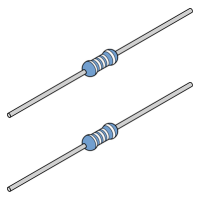
Ever wondered how your phone manages to stay charged without blowing up or how your TV remote controls those watching marathons? It's all thanks to a tiny but mighty electronic component - the resistor. Resistors are one of the most valuable parts of the tech world. These little wizards quietly control the flow of electric current in ways that make our gadgets tick. In this article, we're taking a deep dive into the world of resistors, from the magic of Ohm's law to cracking the colorful code that reveals their hidden values.

Interfacing laser diode module with Arduino

  • avatar
  • 5.8K Views
  • 2 Likes
  • 4 mins read
Preview post image

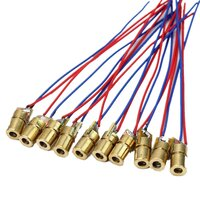
Laser modules emit highly focused beams of light, making them ideal for a wide range of applications. One of the key aspects of a laser module is its power output, typically measured in milliwatts (mW). Arduino compatible laser modules typically have a power output within the lower range ensuring safety and compatibility with the microcontroller board. It's important to note that modules require safety precautions due to their increased risk of eye damage and potential fire hazards for higher-power lasers.

 Join Our Monthly Newsletter

Get the latest news and popular articles to your inbox every month

We never send SPAM nor unsolicited emails

Controlling fan speed with Arduino using a potentiometer

  • avatar
  • 4.2K Views
  • 4 Likes
  • 5 mins read
Preview post image

Adjusting a fan's speed using an Arduino is a great way to learn about PWM (Pulse Width Modulation) and motor control. With just a potentiometer and some simple wiring, you can create a smooth, manual speed adjustment system. This setup is useful for cooling electronics, ventilation projects, or any application where adjustable airflow is needed.

DYI - Programmed Christmas lights

  • avatar
  • 4.1K Views
  • 10 mins read
Preview post image

Take your holiday decorations to the next level with a custom fairy light display powered by an Arduino Nano. This project blends creativity and basic electronics, allowing you to program fairy lights with unique patterns and effects that reflect your personal style. By replacing generic, store-bought solutions with something custom-made, you’ll create a decoration that’s not only festive but truly one of a kind. With accessible components and straightforward steps, it offers an engaging way to add warmth and charm to your holiday season.

Repository cache in Symfony

  • avatar
  • 4.3K Views
  • 11 mins read
Preview post image

In today's data-driven world, efficient data management is paramount for any modern web application. Symfony, a popular PHP framework, provides developers with powerful tools and patterns to streamline data handling. Two key components that play a pivotal role in enhancing data management within Symfony applications are the Repository Pattern and Data Caching. In this article, we'll delve into these concepts, exploring how they work together to boost performance and simplify data access in Symfony projects.

Practical guide to ESP8266 for TCP servers and clients

Available to registered members only
  • avatar
  • 3.9K Views
  • 3 Likes
  • 17 mins read
Preview post image

The ESP8266 module has become a favorite among electronics enthusiasts for its low cost and powerful capabilities. This Wi-Fi module can be used in various ways, making it a versatile tool for many IoT applications. In this guide, we will explore how the ESP8266 can function as both a server and a client using TCP protocol.

Controlling a LED with Arduino

  • avatar
  • 4.1K Views
  • 6 mins read
Preview post image

Light Emitting Diodes (LEDs) are incredibly adaptable components often employed in electronics projects for various purposes, from indicating status to creating captivating lighting effects. When it comes to managing LEDs with an Arduino, you have the option of utilizing either digital pins or Pulse Width Modulation (PWM) pins. In this article, we'll explore the advantages of each method and provide you with a comprehensive guide on how to control LEDs using an Arduino.

Understanding SIPO Shift Registers

  • avatar
  • 3.8K Views
  • 1 Like
  • 7 mins read
Preview post image

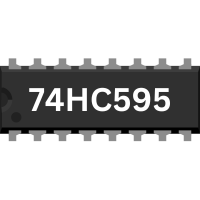
Shift registers are integral components in digital electronics, enabling efficient data management and transfer. When working on Arduino projects, you may quickly run into the issue of not having enough output pins to control all your components. This is where SIPO (Serial-In, Parallel-Out) shift registers come into play. These devices allow you to manage multiple outputs with just a few pins on your Arduino, making them a powerful tool for more complex projects involving numerous LEDs, buttons or other peripherals. This article explores why shift registers are necessary, how they function, and their practical applications with Arduino.

Connecting a motor to Arduino

  • avatar
  • 4.1K Views
  • 1 Like
  • 7 mins read
Preview post image

Arduino microcontrollers are the heart of countless DIY projects, from robots to automated systems. To bring these projects to life, you often need to interface them with motors. In this guide, we'll walk you through the essential steps of connecting a motor to an Arduino using a separate power supply while ensuring control with precision using an NPN transistor. This approach allows you to harness the full potential of your motorized creations without overloading your Arduino.