wiring schema


Play Home Alone song with a piezo buzzer and Arduino

  • avatar
  • 4.4K Views
  • 3 Likes
  • 7 mins read
Preview image

Home Alone has since been considered one of the best Christmas films and Somewhere in My Memory has been nominated as best original song. We wanted to recreate the melody of the film's theme song with a piezo buzzer and share with you. Buzzer is used to generate sound, beep or even melody of a song. It can be found in alarm devices, computers, timers and confirmation of user input such as a mouse click or keystroke.

How to use tricolor LED module with Arduino

  • avatar
  • 4.7K Views
  • 3 Likes
  • 4 mins read
Preview image

The KY-016 is capable of producing wide range of different colors by mixing blue, green and red lights. The RGB LED module will not require any limiting resistors. Those resistors are already integrated in the circuit, and so 5V can be directly used as power input.

Wi-Fi Integration with ESP8266 module

  • avatar
  • 3.8K Views
  • 11 mins read
Preview image

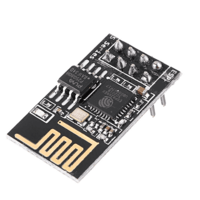
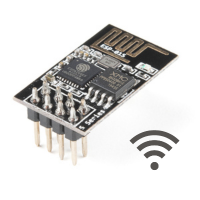
The ESP8266 has become an essential component in electronics, offering an affordable and compact means to integrate Wi-Fi connectivity into various projects. This tiny module has attracted a broad spectrum of users all aiming to implement smart home systems, IoT devices, and remote monitoring solutions. With its compact size, low power consumption, and seamless integration with Wi-Fi networks, the ESP8266 empowers innovators to create groundbreaking solutions in the digital age. The ESP8266 offers a user-friendly platform to bring your ideas to life. In this article, we will examine a particular variant of ESP8266 modules, specifically the ESP-01.

 Join Our Monthly Newsletter

Get the latest news and popular articles to your inbox every month

We never send SPAM nor unsolicited emails

Practical guide to ESP8266 for UDP servers and clients

Available to registered members only
  • avatar
  • 3.6K Views
  • 2 Likes
  • 15 mins read
Preview image

The ESP8266 module has become a favorite among electronics enthusiasts for its low cost and powerful capabilities. This Wi-Fi module can be used in various ways, making it a versatile tool for many IoT applications. In this guide, we will explore how the ESP8266 can function as both a server and a client using UDP protocol.

Using switch buttons with Arduino

  • avatar
  • 4.3K Views
  • 3 Likes
  • 4 mins read
Preview image

Let's speak now about switch buttons, the wiring and how to implement the code for this circuit elements in Arduino. Switch buttons connect two points in a circuit when you press them and maintain the state without the need to keep the button pressed. That means that logic state of the circuit change every time you press the button.

Using a motion sensor with Arduino

  • avatar
  • 3.3K Views
  • 7 mins read
Preview image

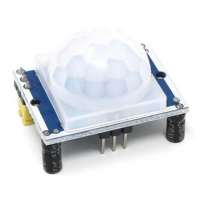
Motion sensors are essential in modern automation projects, playing a key role in security systems, smart lighting, and interactive devices. These sensors detect movement and trigger specific actions, making them useful for various applications. When paired with an Arduino, a motion sensor can be programmed to respond intelligently, creating an efficient and responsive system. This guide explains how motion sensors work, how to connect them to an Arduino, and how to write the code needed to make them function properly.

Connecting tilt sensor with Arduino

  • avatar
  • 3.8K Views
  • 1 Like
  • 5 mins read
Preview image

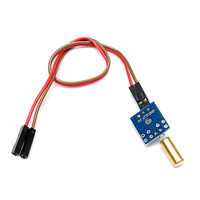
A tilt sensor is a type of sensor that can detect the orientation or tilt of an object relative to the force of gravity. It works by measuring the change in angle of the object with respect to the vertical axis.

Tilt sensors can be found in various forms, such as simple mechanical switches, mercury switches, and electronic sensors. They are commonly used in applications that require the detection of tilting or changes in orientation, such as in construction equipment, automotive safety systems, robotics, and gaming controllers.

Wi-Fi Integration made easy with ESP8266WiFi library

Available to registered members only
  • avatar
  • 3.2K Views
  • 2 Likes
  • 12 mins read
Preview image

The ESP8266 is a low-cost Wi-Fi microchip with full TCP/IP stack and microcontroller capability, created by Espressif Systems. It's popular among hobbyists and developers for its affordability and ease of use, making it a go-to choice for various IoT projects. When paired with the ESP8266WiFi library, this tiny module becomes even more powerful, simplifying the process of connecting devices to Wi-Fi networks and enabling a multitude of creative applications.

ESP8266 Firmware update

Available to Premium members only
  • avatar
  • 3.1K Views
  • 12 mins read
Preview image

The ESP8266 is a popular Wi-Fi module used in many IoT projects. Keeping its firmware up-to-date ensures you have the latest features, security patches, and bug fixes. Updating the firmware might seem difficult, but it's quite straightforward once you understand the steps involved. In this article, we'll explore how to update the firmware of the ESP8266 module, a crucial task for maintaining optimal performance and security. This update process can be carried out either locally, using a USB connection, or remotely via cloud. We'll examine both methods to provide a comprehensive understanding of how to keep your ESP8266 up-to-date with the latest firmware version.

Play The Simpsons theme song with Arduino and a buzzer

Available to registered members only
  • avatar
  • 3.1K Views
  • 1 Like
  • 5 mins read
Preview image

The Simpsons, that legendary animated series we all know and love, has become a cultural phenomenon. With its hilarious take on family life in Springfield, it's an absolute classic. We decided to have a bit of fun and recreate the show's iconic theme song using a piezo buzzer.

Buzzer is used to generate sound, beep or even melody of a song. It can be found in alarm devices, computers, timers and confirmation of user input such as a mouse click or keystroke. A piezo buzzer is not like a regular speaker that you might think of. It uses a material that actually changes shape when you apply electricity to it which in turn creates noise. The faster you bend the material, the higher the pitch of the noise that is produced.