flash


Low power consumption mode in Arduino

  • avatar
  • 1.7K Views
  • 11 mins read
Preview image

Battery-powered Arduino projects have one common enemy: a board that drains power even when it has nothing to do. By default, Arduino runs at full speed continuously, burning through battery charge whether it's actively doing something or just waiting. Low power mode solves this by putting the microcontroller to sleep when it's idle, waking it up only when there's actual work to do. The concept is straightforward: the microcontroller spends most of its time asleep, wakes up to do something useful (take a sensor reading, send data, check a button), then goes back to sleep immediately.

Custom authentication in Laravel

  • avatar
  • 1.6K Views
  • 10 mins read
Preview image

Laravel ships with a solid authentication system out of the box, and most projects are well served by it. But there are situations where you need to authenticate users against something completely different: a legacy database, an external API, an LDAP server, or some other custom data source. Laravel's authentication system is built around a set of contracts and driver hooks that make this surprisingly straightforward to implement.

Story points in Agile teams

  • avatar
  • 1.3K Views
  • 12 mins read
Preview image

Story points are one of those concepts that sound simple on paper but can cause a surprising amount of confusion, debate, and occasionally heated arguments in practice. Yet despite all the drama surrounding them, they remain one of the most widely used tools for planning and estimating software work. So what exactly are they, how do they work, and why does everyone seem to have a slightly different take on them?

 Join Our Monthly Newsletter

Get the latest news and popular articles to your inbox every month

We never send SPAM nor unsolicited emails

Getting started with Arduino

  • avatar
  • 1.2K Views
  • 1 Like
  • 9 mins read
Preview image

Arduino is a small programmable board that lets you control real electronic components with code. You can connect sensors, buttons, motors, LEDs, displays, and many other modules, then write a few lines in C or C++ to decide how everything should behave. The board reads inputs, processes them in real time, and reacts through its output pins. To start building solid projects, it is important to understand how the boards work, how to choose the right model, how to set up the development tools, and how key electronics concepts such as resistors, transistors, communication protocols, and PWM fit together in a practical circuit.

Getting started with the HC-05 Bluetooth module

  • avatar
  • 1.0K Views
  • 1 Like
  • 16 mins read
Preview image

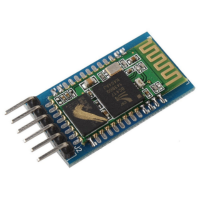
The HC-05 is one of the most popular Bluetooth modules in the Arduino ecosystem, and for good reason. It's affordable, well documented, and flexible enough to handle a wide range of use cases. It can operate as both a master and a slave device, meaning it can initiate connections to other Bluetooth devices as well as wait for them. For projects where you just need a phone to talk to an Arduino, that distinction doesn't matter much. But for anything more involved, like two Arduino boards communicating wirelessly, the HC-05 is the right tool for the job.