real time data


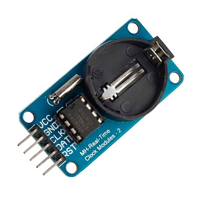
Keeping time with DS1302: real-time clock on Arduino

  • avatar
  • 22.7K Views
  • 7 Likes
  • 8 mins read
Preview image

In the fascinating world of Arduino and microcontrollers, keeping time is key. You might need to build a digital clock, a timer, or something more complex like an automated plant watering system. That's where the DS1302 module steps in. It's a handy little device that can help you keep time accurately in your Arduino projects. In this article, we'll take a closer look at the DS1302 module, understand how it works, and explore its applications.
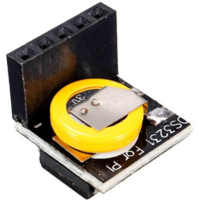

Keeping real-time clock with mini DS3231 on Arduino

  • avatar
  • 20.5K Views
  • 3 Likes
  • 10 mins read
Preview image

When it comes to accurate timekeeping in the world of electronics, the DS3231 real-time clock (RTC) module is a reliable and precise solution. This compact yet robust module not only keeps time with exceptional accuracy but also integrates smoothly with popular microcontrollers like the Arduino Nano. In this article, we'll explore the features, wiring, and potential applications of the DS3231.

Soft Deletes vs Hard Deletes: Making the right choice

  • avatar
  • 13.0K Views
  • 1 Like
  • 3 mins read
Preview image

In the world of data management, there are often two contrasting approaches to removing information from a database: soft deletes and hard deletes. Both have their pros and cons, and the choice between them can significantly impact how your data is handled. Let's dive into this crucial decision and help you decide which option is best suited to your needs.

 Join Our Monthly Newsletter

Get the latest news and popular articles to your inbox every month

We never send SPAM nor unsolicited emails

Getting started with Memcache for PHP

  • avatar
  • 8.3K Views
  • 1 Like
  • 5 mins read
Preview image

Memcache is a caching system that stores data in memory to make applications faster and more efficient. It works across multiple languages, including PHP, Python, Ruby, and others. In the context of PHP, it can reduce database load and speed up page rendering by keeping frequently accessed data available in memory. This article focuses on how to use Memcache specifically with PHP.

Domain Driven Design: Components

  • avatar
  • 9.2K Views
  • 9 Likes
  • 9 mins read
Preview image

Previously, we explored the fundamental concepts and terminology utilized in Domain Driven Design (DDD), as well as the layers that make up its architecture. In this section, we will examine the artifacts employed to integrate these concepts and construct our application, using PHP as an example.

MongoDB aggregation pipelines explained

Available to registered members only
  • avatar
  • 7.8K Views
  • 6 mins read
Preview image

MongoDB’s aggregation framework is a robust tool for processing and analyzing data directly within the database. Instead of retrieving data to manipulate it in your application code, you can run complex queries and transformations on the server side. The core of this framework is the aggregation pipeline, which allows you to chain together various stages to perform tasks like filtering, grouping, sorting, and reshaping your data.

Connecting to an SQLite database with PHP

  • avatar
  • 7.3K Views
  • 1 Like
  • 5 mins read
Preview image

SQLite is a lightweight, self-contained database engine that doesn't require a separate server to run. It's a popular choice for smaller applications, embedded systems, and situations where simplicity and minimal setup are crucial. In PHP development, SQLite is an excellent option for managing data without needing the complexity of larger database systems. Whether you're working on a small project or need a simple solution for data storage, SQLite can be a powerful tool. This article will guide you through using SQLite with PHP, showing how to set it up, perform common operations, and use it in your applications.

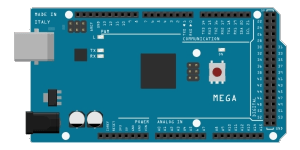
Getting started with Arduino Mega

  • avatar
  • 7.8K Views
  • 2 Likes
  • 6 mins read
Preview image

Arduino is an open-source electronics platform based on easy-to-use hardware and software. Arduino boards are able to read inputs - light on a sensor, a finger on a button, or a Twitter message - and turn it into an output - activating a motor, turning on an LED, publishing something online. You can tell your board what to do by sending a set of instructions to the microcontroller on the board. To do so you use the Arduino programming language and the Arduino Software (IDE).

Getting started with Arduino Zero

  • avatar
  • 7.3K Views
  • 1 Like
  • 6 mins read
Preview image

Arduino is an open-source electronics platform based on easy-to-use hardware and software. Arduino boards are able to read inputs - light on a sensor, a finger on a button, or a Twitter message - and turn it into an output - activating a motor, turning on an LED, publishing something online. You can tell your board what to do by sending a set of instructions to the microcontroller on the board. To do so you use the Arduino programming language and the Arduino Software (IDE).

Estimating articles reading time

  • avatar
  • 7.2K Views
  • 5 Likes
  • 2 mins read
Preview image

Based on the analysis of 190 studies, the average silent reading rate for adults in English is 238 words per minute for non-fiction and 260 words per minute for fiction. The difference can be predicted by taking into account the length of the words, with longer words in non-fiction than in fiction.