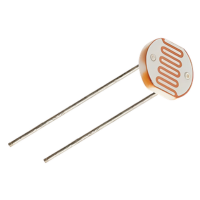
soil moisture


Getting started with Arduino Due

  • avatar
  • 206 Views
  • 6 mins read
Preview image

Arduino is an open-source electronics platform based on easy-to-use hardware and software. Arduino boards are able to read inputs - light on a sensor, a finger on a button, or a Twitter message - and turn it into an output - activating a motor, turning on an LED, publishing something online. You can tell your board what to do by sending a set of instructions to the microcontroller on the board. To do so you use the Arduino programming language and the Arduino Software (IDE).

Docker Installation Guide

  • avatar
  • 154 Views
  • 5 mins read
Preview image

Docker is an open platform that allows developers to build, ship, and run applications inside containers. A container packages an application together with its runtime, libraries, and configuration so it behaves consistently across environments. The same container image can run on a local Linux machine, a staging server, or a production cluster with predictable results. This approach reduces environment related issues and makes deployments more structured and reproducible.

Running PHP 8.5 with Nginx on Ubuntu

  • avatar
  • 13 Views
  • 7 mins read
Preview image

Running modern PHP applications on a stable stack is a basic requirement for most IT and development environments. Pairing PHP 8.5 with Nginx gives you strong performance, good resource usage, and solid flexibility for APIs, CMS platforms, and custom applications.

In this guide, you will install PHP 8.5 with PHP FPM, remove older PHP versions safely, manage extensions, and configure Nginx to use the new version. The steps are written for common Linux distributions such as Ubuntu and Debian, but the logic is similar on other systems.

 Join Our Monthly Newsletter

Get the latest news and popular articles to your inbox every month

We never send SPAM nor unsolicited emails

Running PHP 8.5 with Nginx on Ubuntu

  • avatar
  • 8 Views
  • 7 mins read
Preview image

Running modern PHP applications on a stable stack is a basic requirement for most IT and development environments. Pairing PHP 8.5 with Nginx gives you strong performance, good resource usage, and solid flexibility for APIs, CMS platforms, and custom applications.

In this guide, you will install PHP 8.5 with PHP FPM, remove older PHP versions safely, manage extensions, and configure Nginx to use the new version. The steps are written for common Linux distributions such as Ubuntu and Debian, but the logic is similar on other systems.