Arduino IDE


PCB Power Transformer Guide: Selection, Types & Practical Tips

  • avatar
  • 1.9K Views
  • 7 mins read

At first glance, selecting a PCB power transformer may seem straightforward. Matching the voltage with circuit requirements appears sufficient. However, in practice, research and practical observations in electronics design show that transformer selection involves much more than simply matching specifications.


DIY - Universal RC Joystick: concept

  • avatar
  • 2.6K Views
  • 3 Likes
  • 4 mins read
Preview image

Controlling devices over a distance opens lots of possibilities. Our Arduino roadmap contains many projects that must be controlled remotely and sometimes on a long-distance. Of course, it can be done with a PC but our experience has shown that it becomes complicated when you need long way, portable and rapid communications. Our solution was designing a multi-functional remote controller, we have called it AirControl.

DYI - Programmed Christmas lights: mounting

  • avatar
  • 1.8K Views
  • 8 mins read
Preview image

Now that you're excited about the idea of custom Christmas lighting, it's time to focus on how to physically set everything up. Mounting is where your lighting project starts to take shape, turning ideas into something tangible. It’s the process of preparing and connecting the components that will bring your design to life. In this part, we'll focus on setting up the physical structure for your lighting. We'll outline how to connect your lights, controller, and power source to create a functional base for your project.

 Join Our Monthly Newsletter

Get the latest news and popular articles to your inbox every month

We never send SPAM nor unsolicited emails

Low power consumption mode in Arduino

  • avatar
  • 1.4K Views
  • 11 mins read
Preview image

Battery-powered Arduino projects have one common enemy: a board that drains power even when it has nothing to do. By default, Arduino runs at full speed continuously, burning through battery charge whether it's actively doing something or just waiting. Low power mode solves this by putting the microcontroller to sleep when it's idle, waking it up only when there's actual work to do. The concept is straightforward: the microcontroller spends most of its time asleep, wakes up to do something useful (take a sensor reading, send data, check a button), then goes back to sleep immediately.

DYI - Programmed Christmas lights: concept

  • avatar
  • 1.6K Views
  • 2 mins read
Preview image

The holiday season is here, and with it comes the joy of decorating and spreading cheer. One way to make your celebrations truly stand out is by creating your own custom Christmas lighting. A DIY project brings a personal touch, turning ordinary lights into something unique and memorable. Besides the festive fun, it's a creative way to learn and experiment with technology.

Getting started with Arduino

  • avatar
  • 1.0K Views
  • 1 Like
  • 9 mins read
Preview image

Arduino is a small programmable board that lets you control real electronic components with code. You can connect sensors, buttons, motors, LEDs, displays, and many other modules, then write a few lines in C or C++ to decide how everything should behave. The board reads inputs, processes them in real time, and reacts through its output pins. To start building solid projects, it is important to understand how the boards work, how to choose the right model, how to set up the development tools, and how key electronics concepts such as resistors, transistors, communication protocols, and PWM fit together in a practical circuit.

New lunch javascript with functions codelobster IDE

  • avatar
  • 1.6K Views
  • 7 mins read

Are you looking for an efficient way to practise JavaScript programming? Do you want a tool that can streamline your coding process and make it more enjoyable? Look no further than CodeLobster IDE! This powerful integrated development environment offers an array of features aimed at simplifying JavaScript programming. Whether you're a seasoned developer or just starting out, CodeLobster IDE can help you write better code faster. In this blog post, we'll explore the benefits of using CodeLobster IDE for JavaScript programming and how to get started with this user-friendly tool. So, let's dive in and see what makes CodeLobster IDE stand out from the crowd!

Getting started with the HC-05 Bluetooth module

  • avatar
  • 639 Views
  • 1 Like
  • 16 mins read
Preview image

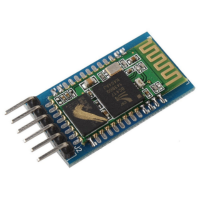
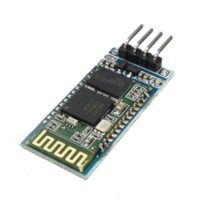
The HC-05 is one of the most popular Bluetooth modules in the Arduino ecosystem, and for good reason. It's affordable, well documented, and flexible enough to handle a wide range of use cases. It can operate as both a master and a slave device, meaning it can initiate connections to other Bluetooth devices as well as wait for them. For projects where you just need a phone to talk to an Arduino, that distinction doesn't matter much. But for anything more involved, like two Arduino boards communicating wirelessly, the HC-05 is the right tool for the job.

Serial communication between two Arduino boards

Available to registered members only
  • avatar
  • 366 Views
  • 9 mins read
Preview image

Getting two Arduino boards to talk to each other opens up projects that a single board can't handle on its own. You might have one board reading sensors in one corner of a room and another driving a display somewhere else, and the two need to share what they know. Serial communication is one of the simplest ways to make that happen, and it works with almost any Arduino model you have lying around. This article walks through connecting two Arduino Nano boards and passing data back and forth over their serial ports.