wiring schema


Repository cache in Symfony

  • avatar
  • 4.9K Views
  • 11 mins read
Preview image

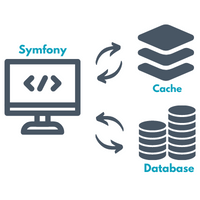
In today's data-driven world, efficient data management is paramount for any modern web application. Symfony, a popular PHP framework, provides developers with powerful tools and patterns to streamline data handling. Two key components that play a pivotal role in enhancing data management within Symfony applications are the Repository Pattern and Data Caching. In this article, we'll delve into these concepts, exploring how they work together to boost performance and simplify data access in Symfony projects.

Using transistors in electronic circuits

  • avatar
  • 4.9K Views
  • 2 Likes
  • 7 mins read
Preview image

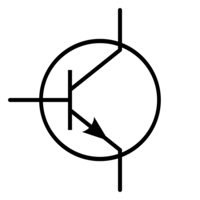
Transistors are fundamental semiconductor devices that revolutionized the world of electronics. Among various types of transistors, Bipolar Junction Transistors (BJTs) hold significant importance due to their widespread use in amplification, switching, and signal processing applications. This article will explore the two main types of BJT transistors: NPN and PNP. We will explore their basic structures, operating principles, and essential circuit elements required for their proper functioning.

Pressure and temperature measurement with GY-65

  • avatar
  • 4.8K Views
  • 1 Like
  • 5 mins read
Preview image

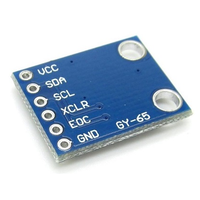
Precision monitoring of atmospheric conditions becomes a reality with the GY-65 module based on BMP085 sensor. Armed with the ability to measure temperature, pressure, and altitude, the GY-65 module opens up a world of possibilities for weather stations, altitude tracking devices, and other projects requiring accurate environmental data. In this article, we delve into the capabilities of the module, examining its features, connectivity with Arduino.

 Join Our Monthly Newsletter

Get the latest news and popular articles to your inbox every month

We never send SPAM nor unsolicited emails

Getting started with Arduino Uno

  • avatar
  • 4.6K Views
  • 1 Like
  • 5 mins read
Preview image

Arduino is an open-source electronics platform based on easy-to-use hardware and software. Arduino boards are able to read inputs - light on a sensor, a finger on a button, or a Twitter message - and turn it into an output - activating a motor, turning on an LED, publishing something online. You can tell your board what to do by sending a set of instructions to the microcontroller on the board. To do so you use the Arduino programming language and the Arduino Software (IDE).
Pull-up and Pull-down resistors

  • avatar
  • 4.3K Views
  • 4 mins read
Preview image

A resistor is a passive two-terminal electrical component that implements electrical resistance as a circuit element. In electronic circuits, resistors are used to reduce current flow and adjust signal levels among other uses. Resistance is measured in Ohm with a sign of Ω.

A microcontroller (e.g. Arduino) utilizes I/O signals for communication with external hardware devices, where the most commonly known being GPIO. As a reminder, digital logic circuits have three logic states: high, low and floating (or high impedance). When there’s nothing connected to your GPIO pins, your program will read a floating impedance state, which we do not want. To achieve either high or low states, we’ll have to implement pull-up or pull-down resistors in our digital circuit.

Getting started with Arduino Due

  • avatar
  • 861 Views
  • 6 mins read
Preview image

Arduino is an open-source electronics platform based on easy-to-use hardware and software. Arduino boards are able to read inputs - light on a sensor, a finger on a button, or a Twitter message - and turn it into an output - activating a motor, turning on an LED, publishing something online. You can tell your board what to do by sending a set of instructions to the microcontroller on the board. To do so you use the Arduino programming language and the Arduino Software (IDE).
What is the Model Context Protocol (MCP)?

  • avatar
  • 862 Views
  • 1 Like
  • 6 mins read
Preview image

As large language models become part of development tools, internal platforms, and operational systems, expectations change. Models are no longer limited to answering questions. They are asked to read files, inspect data, and interact with services. Handling this context through informal prompt injection or custom integrations quickly leads to brittle setups. Model Context Protocol, commonly known as MCP, provides a structured way to expose context and actions to models while keeping control firmly on the application side.