circuit design


Pressure and temperature measurement with GY-68

  • avatar
  • 7.9K Views
  • 1 Like
  • 6 mins read
Preview image

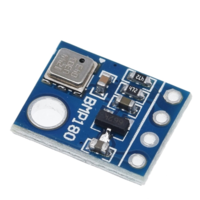
The GY-68 module, also known as the BMP180 module, is a popular sensor module used for measuring atmospheric pressure, temperature, and altitude. It features a highly precise digital barometric pressure sensor that can be easily integrated with an Arduino board. In this tutorial, we will guide you through the process of connecting the GY-68 module to an Arduino, enabling you to gather accurate environmental data for your projects. So, let's get started!

Domain Driven Design: Introduction

  • avatar
  • 8.1K Views
  • 15 Likes
  • 3 mins read
Preview image

Domain Driven Design, or DDD, is a software design approach that emphasizes solving business problems and organizing the corresponding logic, rather than focusing on details such as programming languages or infrastructure technologies. The primary goal of DDD is to map real-world systems or processes into software artifacts. In order to enhance our comprehension of the fundamentals of DDD, let's take a closer look at some crucial concepts.

Domain Driven Design: Components

  • avatar
  • 8.1K Views
  • 9 Likes
  • 9 mins read
Preview image

Previously, we explored the fundamental concepts and terminology utilized in Domain Driven Design (DDD), as well as the layers that make up its architecture. In this section, we will examine the artifacts employed to integrate these concepts and construct our application, using PHP as an example.

 Join Our Monthly Newsletter

Get the latest news and popular articles to your inbox every month

We never send SPAM nor unsolicited emails

Reading MPU6050 sensors with Arduino

  • avatar
  • 7.6K Views
  • 6 Likes
  • 10 mins read
Preview image

The MPU-60X0 is the world's first integrated 6-axis MotionTracking device that combines a 3-axis gyroscope, 3-axis accelerometer and a Digital Motion Processor (DMP) all in a small package. It helps to measure velocity, orientation, acceleration, displacement and other motion like features

The MPU-6050 features three 16-bit analog-to-digital converters (ADCs) for digitizing the gyroscope outputs and three 16-bit ADCs for digitizing the accelerometer outputs. For precision tracking of both fast and slow motions, the parts feature a user-programmable gyroscope full-scale range and a user-programmable accelerometer full-scale range.

How to use potentiometer with Arduino

  • avatar
  • 7.0K Views
  • 4 Likes
  • 4 mins read
Preview image

A potentiometer is a simple knob that provides a variable resistance, which we can read into the Arduino board as an analog value. They can be attuned from zero ohms to whatever maximum resistance that is specific to it. For example, a potentiometer of 10 kΩ can be adjusted from 0 Ω to its maximum of 10 kΩ.

The essential guide to resistors

  • avatar
  • 6.3K Views
  • 1 Like
  • 5 mins read
Preview image

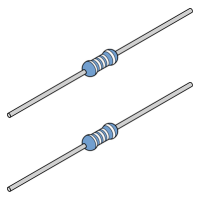
Ever wondered how your phone manages to stay charged without blowing up or how your TV remote controls those watching marathons? It's all thanks to a tiny but mighty electronic component - the resistor. Resistors are one of the most valuable parts of the tech world. These little wizards quietly control the flow of electric current in ways that make our gadgets tick. In this article, we're taking a deep dive into the world of resistors, from the magic of Ohm's law to cracking the colorful code that reveals their hidden values.

Interfacing laser diode module with Arduino

  • avatar
  • 6.0K Views
  • 2 Likes
  • 4 mins read
Preview image

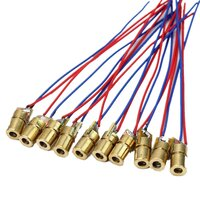
Laser modules emit highly focused beams of light, making them ideal for a wide range of applications. One of the key aspects of a laser module is its power output, typically measured in milliwatts (mW). Arduino compatible laser modules typically have a power output within the lower range ensuring safety and compatibility with the microcontroller board. It's important to note that modules require safety precautions due to their increased risk of eye damage and potential fire hazards for higher-power lasers.

Controlling fan speed with Arduino using a potentiometer

  • avatar
  • 4.7K Views
  • 4 Likes
  • 5 mins read
Preview image

Adjusting a fan's speed using an Arduino is a great way to learn about PWM (Pulse Width Modulation) and motor control. With just a potentiometer and some simple wiring, you can create a smooth, manual speed adjustment system. This setup is useful for cooling electronics, ventilation projects, or any application where adjustable airflow is needed.

Transistors: the building blocks of our digital world

  • avatar
  • 4.7K Views
  • 1 Like
  • 7 mins read
Preview image

Transistors are semiconductor devices that regulate the flow of electrical current within a circuit. Their invention in the mid-20th century marked a pivotal moment in electronics. Semiconductors, typically made of silicon or germanium, form the basis of transistors, granting them the ability to switch and amplify electrical signals. These devices have revolutionized the world of electronics, making way for the digital age by enabling the miniaturization of complex circuits and facilitating the rapid advancement of technology.

Connecting a motor to Arduino

  • avatar
  • 4.3K Views
  • 1 Like
  • 7 mins read
Preview image

Arduino microcontrollers are the heart of countless DIY projects, from robots to automated systems. To bring these projects to life, you often need to interface them with motors. In this guide, we'll walk you through the essential steps of connecting a motor to an Arduino using a separate power supply while ensuring control with precision using an NPN transistor. This approach allows you to harness the full potential of your motorized creations without overloading your Arduino.